Well if none of the measures you already tried to stop that did not work, then maybe one thing that can help you is asking yourself whether you are not feeling drained after interacting with those people?
I, like yourself, cannot override my engineering mindset. I ALWAYS WANT TO HELP. But at one point I reframed it as an energy budget problem and how efficiently are my time and energy spent... and then it clicked.
I have learned to do that, but it actually makes me uncomfortable to do it.
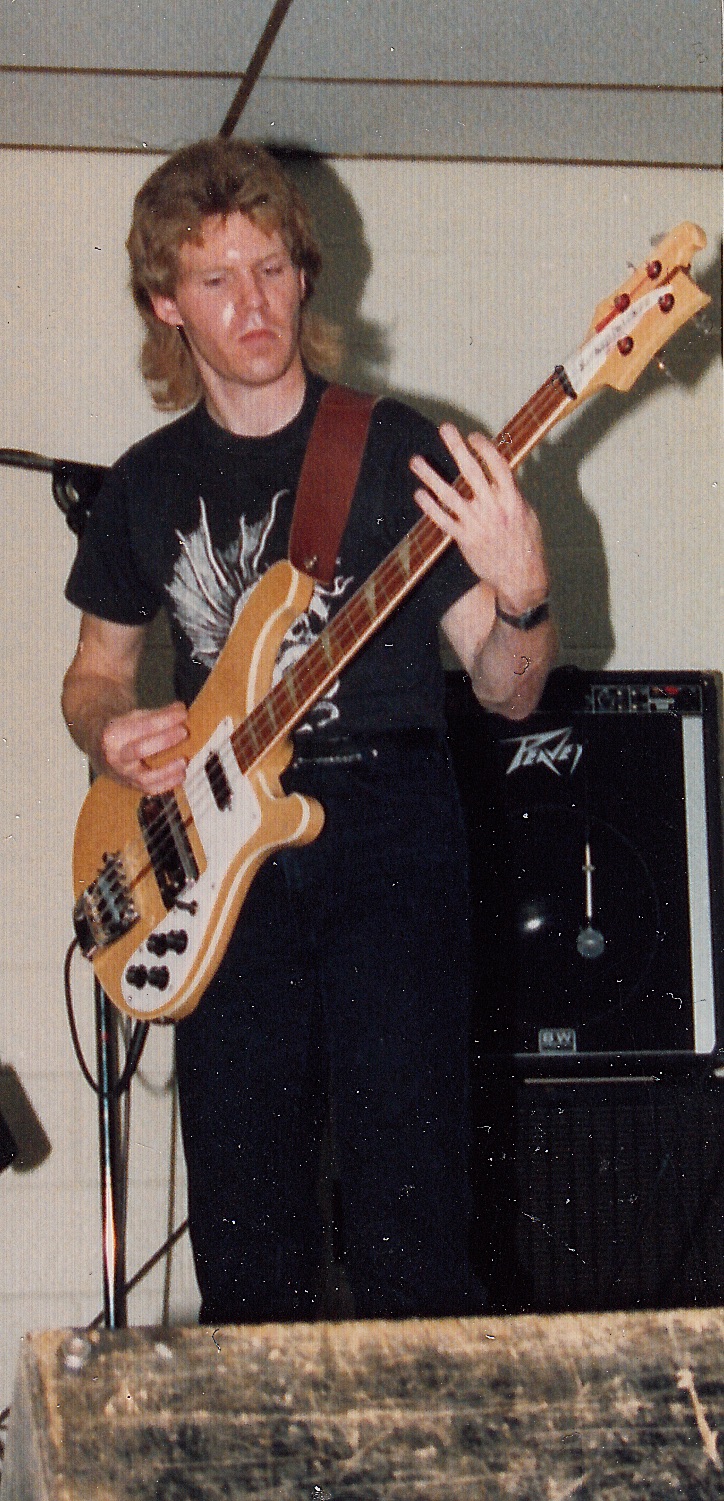
I'm "on the spectrum," which, in my case, manifests as not being very comfortable, when people give me attention. That's why I like working on "infrastructure" stuff (and also why I used to be a bass player[0]).
Like with everything, none of the both extremes are good.
What helps me in situations where people talk about it for the umpteenth time is trying to drill down and find the root cause with carefully worded questions. I think I might be ready to become a therapist, lol. Though my fuse is quite short due to my own stress so I don't put myself in the "I am your emotional trash bin" kind of situations.
So to me even the situations you describe can be made use of. Think of it as a long-running background task with many steps; after each retry you get a new exception stack trace. F.ex. during conversation #7 you might understand one or two causes of the problem but at conversation #12 you might already have a nice root cause and you can then try to gently nudge the person towards addressing that.
Of course you are not mandated to. It's all about what you need in this current phase of life as well; you don't have to be people's therapist. It's just what I find super interesting the last year or so -- root-cause analysis of human problems.
But when I understand that somebody just wants to whine and be a constant victim, I mentally check out. Not worth the joules that my brain would spend on that person.
That really depends if you like (or are mostly indifferent to) the new table. If you hate it then it becomes a game of "who of us two is more important to satisfy with a table". Definitely not a position you want to be in.
Relationships must be two-way streets, always.
I have made quite a lot of concessions for my wife for the current rented flat -- simply because I did not care about 99% of the things she wanted to change. I only gave her a rather loose framework: "this must fit these physical dimensions as you yourself can see here in this corner" and "I am not willing to spend hundreds to change something that is currently performing to 90% of the standards of both of us" and "how difficult it is to ship and install this?" -- and she has been mature and considerate enough to understand the boundaries and nailed them every single time so far in our 11.5 years together. And she still got almost everything she wanted and is visibly happier with the environment.
When both sides have preferences they feel safe sharing but are still reasonable above all, then things are going smoothly and flow naturally.
Of course there are the rare exceptions where I just gave up and said to her: "OK, I am leaving this to you, figure all the details out and I'll just pay it at the end of the process". I was not unhappy but she did not want to budge on a few things and I ultimately just stashed the old thing in the garage in case she understands she made a bad deal or the new thing was underperforming.
I agree strongly with "pick your battles". You have to be able to read the person in real time. It's actually much easier than most technical people think.
Our relationships sound very similar. We are so fucking lucky! Having 2 people that are striving towards a harmonious relationship is increasingly rare.
It's not different per se, it's just being made much more difficult i.e. if you had to look for one pearl through a pile of 200 barnacles, how you have to scan through 3000.
That's like 100,000 USD. I keep thinking about making a rap video wearing a 10 TB gold chain surrounded by big booty girls with their naughty bits covered in m.2 SSD's while dissing the AI industry. Though I cant afford the RAM :-/
It’s sad that I can’t interpret if you mean to actually shoot your rap video on film, or have an AI generate it lol. Either way you’re going to need RAM.
For your last sentence, I believe topics are conflated here.
Of course if one writes unsafe Rust and it leads to a CVE then that's on them. Who's denying that?
On the other hand, having to interact with the part of the landscape that's written in C mandates the use of the `unsafe` keyword and not everyone is ideally equipped to be careful.
I view the existence of `unsafe` as pragmatism; Rust never would have taken off without it. And if 5% of all Rust code is potentially unsafe, well, that's still much better than C where you can trivially introduce undefined behavior with many built-in constructs.
Obviously we can't fix everything in one fell swoop.
>>Of course if one writes unsafe Rust and it leads to a CVE then that's on them. >>Who's denying that?
>>The recent bug in the Linux kernel Rust code, based on my understanding, was >>in unsafe code, and related to interop with C. So I wouldn't really classify >>it as a Rust bug.
Why is glue code not normal code in Rust? I don't think anyone else would say that for any other language out there. Does it physically pain you to admit it's a bug in Rust code? I write bugs in all kind of languages and never feel the need for adjectives like "technical", "normal", "everyday" or words like "outlier" to make me feel not let down by the language of choice.
I have worked with Rust for ~3.5 years. I had to use the `unsafe` keyword, twice. In that context it's definitely not everyday code. Hence it's difficult to use that to gauge the language and the ecosystem.
Of course it's a bug in Rust code. It's just not a bug that you would have to protect against often in most workplaces. I probably would have allowed that bug easily because it's not something I stumble upon more than once a year, if even that.
To that effect, I don't believe it's fair to gauge the ecosystem by such statistical outliers. I make no excuses for the people who allowed the bug. This thread is a very good demonstration as to why: everything Rust-related is super closely scrutinized and immediately blown out of proportion.
As for the rest of your emotionally-loaded language -- get civil, please.
I don't care if there can be a bug in Rust code. It doesn't diminish the language for me. I don't appreciate mental gymnastics when evidence is readily available and your comments come out as compulsive defense of something nobody was really is attacking. I'm sorry for the jest in the comments.
I did latch onto semantics for a little time, that much is true, but you are making it look much worse than it is. And yes I get a PTSD and an eye-roll-syndrome from the constant close scrutiny of Rust even though I don't actively work with it for a while now. It gets tiring to read and many interpretations are dramatically negative for no reason than some imagined "Rust zealots always defending it" which I have not seen in a long time here on HN.
But you and me seem to be much closer in opinion and a stance than I thought. Thanks for clarifying that.
The bug in question is in rust glue code that interfaces with a C library. It's not in the rust-C interface or on the C side. If you write python glue code that interfaces with numpy and there's a bug in your glue, it's a python bug not a numpy bug.
I already agreed that technically it is indeed a bug in the Rust code. I would just contest that such a bug is representative is all. People in this thread seem way too eager to extrapolate which is not intellectually curious or fair.
I’ve met one who asked me a question like this and he’s still at Apple having been promoted several times to a fairly senior position. But the question was only half hearted because the question was “how much CO2 would we save if we made something 10% more CPU efficient” and the answer even at Apple’s current scale of billions of iPhones was insignificant.
So now you and I both have come across such a manager. Why would you make the claim most engineer’s don’t come across such people?
Anecdotal evidence and all such, but in my environment actually good managers were rarer than UFO sightings.
Environments and local markets matter a huge amount.
I believe the better question here would be: why would the reverse be claimed at all? Many people in the USA, and a lot of them are over-represented here on HN, are privileged and this is not obvious to them, leading to cringe-worthy reactions like "just find a better company".
I guess I am barking up the wrong tree. I do dislike how over-represented certain perspectives are on HN. It's a very classic filter bubble, and the fact that it's about privileged people makes this even worse.


reply