Public housing has income restrictions associated with it. This article talks about how even people with stable, well-paying jobs struggle to find housing. Public housing isn't the solution for these people.
What we should copy from Vienna is mixed use development. A huge portion of American suburbs are zoned as single family only and you end up with a housing shortage, horrible traffic, and pollution. Mixed use development allows density to increase while reducing traffic and encouraging people to be more fit (by walking or biking more). It's such a no-brainer from a whole-system perspective.
The problem is that NIMBYs and existing regulations exist to preserve the status quo and protect the equity long-term homeowners have accumulated. In places like CA there are additional disincentives to reform like Proposition 13 that favor long term owners at the expense of new homebuyers. Obviously a tax-advantaged asset is going to have a higher price than an equivalent non-tax-advantaged asset. And significant property tax revenue that could otherwise fund public transit and additional construction isn't collected as a result.
Eventually enough boomers will die and the demographic forces will shift and create the opportunity for reform, but this will be too little too late for a whole generation. I'd love for a concerted national effort to tackle this problem and reduce barriers to building the kind of housing America needs, but it's hard to see that happening anytime soon.
Public housing doesn't fundamentally require income restrictions. Most locations place limits on eligibility for public housing, but that's simply because there isn't that much public housing so it's prioritized for those most in need.
Part of Vienna's success is building so much public housing there is plenty to go around, so all sorts of people live in public housing. There isn't a stigma associated with public housing since using it doesn't imply any specific trait.
I'm a big fan of building all sorts of non-market housing all over cities to avoid the slum problem. Charge means-tested rent, so someone will low income pays very little rent. Someone with a good job pays closer to market rent (and that extra revenue helps pay for the overall housing program).
One of the huge successes of Vienna's public housing model is mixing people of different socioeconomic backgrounds. People connect with people with all sorts of different backgrounds and experiences resulting in much strong social cohesion.
I've been to Vienna and I have a lot of positive things to say about the city, but trying to adapt their model 1:1 to the US is not realistic for many reasons.
You're right that public housing doesn't fundamentally require income restrictions. The government could forbid all private construction and take over home development itself, placing price caps as needed. But if you think something like that's going to work in the US when we can't even accomplish much more minor housing reform, you're dreaming. Vienna's model is certainly not that radical.
For starters, even Vienna's social housing model has income restrictions. If you and your partner both earn the average 2023 Viennese salary (about €52,000/person) then you don't quality for social housing because your combined income significantly exceeds the annual threshold (€79,490 for two people in 2023).
Even if you do qualify, you are only eligible if you have lived in Vienna for two years already. This system does nothing for new transplants. And once you do qualify, the wait time to be approved for an apartment can be in excess of 5 years. They even have a "bonus period" to move people who have been waiting for more than 5 years up in the line, because the city recognizes how frustrating that must be.
The system is easily gamed too. Vienna only checks your income once as part of the process. If your income increases later on (e.g. because you finished school and got a great job) you don't become ineligible. That part is fine by itself, but you can also transfer the apartment to a qualifying family member if you decide to move out, and they don't need to wait 5 years. This contributes to the reduced supply and long wait times because it reduces inventory and rewards those with family connections in the city.
And of course this whole system is far from free. If you make the average Viennese salary your income tax rate is 42%, whereas it's 25% for the average American worker. The average Vienna home is worth around 1 million euros and the property tax rate on such a home is a whopping 3.5%. Even in expensive coastal places like San Francisco and San Diego, property tax rates are barely above 1%. The tax burden to fund this kind of social housing (and other great things too, to be fair) is definitely heavy. It's fine to point out the positives of such a system, but the costs have to be acknowledged as well. And in the US I don't think the taxpaying population of any city is willing to bear those kinds of costs.
Vienna's system does do a great job mixing different people together, as you note. But not all of this is due to public housing. Quite a bit of it is simply how walkable the city is and how great their public transport options are. Even a moderate amount of public housing for low income individuals scattered throughout a very foot-friendly city would do a great job mixing people together.
> The government could forbid all private construction and take over home development itself, placing price caps as needed
Nothing approaching that radical an approach would be required. Just getting funded public housing agencies with a mandate to develop non-market multi-family housing using properties in the city's portfolio would be a massive victory for affordability.
It really is a currency, however. It's not a matter of perception but rather of how Bitcoin functions. The biggest difference between a commodity and currency is that a commodity is essential for some process or product. A currency is just one of many ways of funding that process/product. You can't build a computer without gold, copper, and some rare earth metals (commodities) but you can pay for it with USD, bitcoin, yuan, GBP, etc.
If your bear case is a 10-year recovery to 40 from 20 that's a CAGR of 7.18%, about the same as the long-term average CAGR of the S&P. The difference is that the S&P doesn't have bankrupty risk, whereas airlines do [1]. So on a risk-adjusted basis, that kind of trade isn't too appealing unless you'd done significant research to show that the risk of bankruptcy or a buyout by a competitor at a reduced valuation was unlikely.
While you might have done that kind of research, the article implies (correctly, in my view) that the typical Robinhood user did not. No surprise; that sort of research is time consuming and requires significant familiarity with the industry. Yet airlines, cruise companies, and other risky assets were preferred by Robinhood users throughout the pandemic.
I think they bought those stocks(options) because they knew that of course those industries would be bailed out and thus there would be a huge catalyst event that would increase the implied volatility and thus the profits they make. And the other and perhaps more important factor was that those stocks were simply much cheaper than spy shares, and therefore their options would be cheaper too.
> "They however do control access to the account. This means there's a point where they get all sorts of data on me, and while I personally don't mind, I must admit I felt a bit safer when I thought it was a smaller, purpose-built company managing things."
I've never really understood the appeal of account-based password managers. It was a startup and it needed a business model, sure, so from the company's perspective it makes sense. But from a customer's perspective you're accepting a new type of risk that you don't have to worry about if you use a glorified encrypted list (e.g. KeePass) to manage passwords. The payoff is convenience, but personally no amount of convenience is enough to make me comfortable with storing all of my encrypted passwords on a single server somewhere and hoping that there are no exploitable security vulnerabilities (or malicious insiders who might seek to profit from finding or introducing them). Having an offline password manager that never uploads data to a server provides defense in depth, though it's less convenient.
Agreed. Logically, something like KeepassX (https://www.keepassx.org/) is the most logical, secure choice. I think a lot of people pick Lastpass and such for the convenience of browser integration, but I don't think that's necessarily impossible with keepassx - just so happens that nobody is really working on it (which is a shame).
This one in particular -- I use KeePass for my personal stuff, still; but at work, there seem to be a ton of logins we need to share.
Never mind sensitive stuff -- we get lots of use out of LastPass for managing the list of test and demo users on our site. We setup sandbox accounts (with various types of users) for potential customers. Each time the main logins to into LastPass, so if they run into problems, anyone on the dev team can help them out (with no other coordination required).
I've not been terribly impressed by LP's usability, honestly; but for quite a while they've seemed to be the only mature product in this space.
I've noticed Dashlane seems to be catching up here; I'm keeping an eye on them.
Beware, KeePass uses a weird custom key derivation function. LastPass uses PBKDF2 with a configurable number of iterations, a pretty widely accepted standard.
Maybe this has changed since I last checked but this and many other things seemed highly questionable on KeePass.
Back when I first signed up for LastPass, the killer feature for me was that it worked on my BlackBerry Curve. The fact that they made versions of LP for damn near every platform is what sold it for me.
I don't have a BlackBerry anymore, though. Now might be the time to jump ship.
I wouldn't consider Keepass the most secure choice. One of the most common attacks in practice is phishing, and browser integration discourages carelessly pasting your password into something that looks like your bank's site. The Chrome password manager and LastPass can help there, but Keepass does not.
It's true for any level of password management. KeePass is less secure but more convenient than simply memorizing each of your long, secure passwords. Choosing less secure passwords or repeating passwords is more convenient than memorizing long, unique passwords.
Finding the right balance of convenience & security is critical for securing the myriad accounts of the "masses." We know that the average person isn't going to bother memorizing long unique passwords - even the most security conscious person won't do that (except for maybe a handful of super-critical passwords).
What failure mode would you want, if not off? Having a failed sensor+controller control temperature in any way isn't what I'd want. One could have a backup thermostat as a fallback, but I doubt their average customer wants anything that complicated.
The problem is that a failure mode of "off", in the winter, in cold climates, means you come home to $30,000 of water damage and pipe replacement which probably won't be covered by home insurance.
The "fail safe" mode here needs to be "maintain moderate temperatures, neither burning nor freezing". Simple mechanical thermostats do this extremely well.
One of the best and simplest changes I ever made was to have my phone on airplane mode by default. Originally, the change was just to maximize the life of a dying battery, but even after I replaced the battery I discovered that I was happier, more focused, and less stressed when I only checked my phone 3-4 times a day. Essentially, I treat it like I treat email.
Everyone who knows me knows that I do this and I have told them that I am not going to change. For emergencies, they know the people I usually see each day and know to call one of them.
I've discovered that when people can't expect to contact you on a whim at any time, they think ahead and let you know what their plans are in advance. Both parties can then arrange their availability in advance and use their time more efficiently.
After a year of doing this it makes you realize just how absurd and artificial the expectation of continuous availability is. My attention is a resource and I am going to control how I allocate it, not others.
> "At the very least, I like the notion that a person should be able to have some level of control over what companies are allowed to access about them"
Yes, but how do the EU regulations in question promote this goal? Background checks still exist, as does the information about you online. These regulations only impose a small burden to finding the information (by eliminating the quickest and most convenient way of finding it). They offer the illusion of control and nothing more.
> "My current opinion (which is not yet fully formed) is that it is wrong to order Google to unlist results; but, on the other hand, it should be completely legal to order Google to remove what is essentially a dossier that they have on a particular user (at that user's request)."
Again, you're confusing things that are related but not the same. The information cannot be deleted. If Google learned something about you from public sources, that information is in the public domain and Google doesn't own or control it (though it may offer access to it). If it gained that information because you used one or more Google services, then Google has a right to use the information for purposes specified in the EULA.
If you want to have control over your information then the only way to accomplish that is to not give it away in the first place. Neither the individual in question nor Google have any ownership over information once it's public. The only question is how easy and convenient accessing that information should be.
It only benefits those who are already powerful to make access to information difficult. For example, a company can still find out if you were charged with a crime even if Google doesn't return results related to that event, but you will have a much harder time finding out if that company pollutes the environment (do you want to dig through EPA files or review past court cases against the company?) if news articles relevant to that topic have been expunged from search engines.
"The Right to be Forgotten" is just doublespeak for censorship. Selling it as an indispensable tool for personal privacy is a sickening irony.
No. What you point out are not problems with the theoretical Right to be Forgotten, but rather the current implementations of it (which, like I wrote, I have not decided whether or not I can support at all).
Also, I said that it should be legal to order google to delete its stored profile of a user, not that it should have to delete the sources where it got that information from.
The Right to be Forgotten only applies to people, not to corporations.
The idea is that the stuff you did as teen should not be public for everyone – a future employer, or neighbor, should not be able to find your drunk partying photos on the web (an actual issue currently, where employers openly suggest people to "just stop partying or stop using the web").
It's really interesting to me how most people can easily spot propaganda in other cultures and rightfully mock it, but not only fail to notice even the most blatant propaganda in their own but even defend it. I suspect many Americans will do exactly that here, despite this being an obvious piece of fear mongering using basic techniques ripped straight out of a psychology textbook.
> "As the President said in announcing recent intelligence reforms, "We have to make some important decisions about how to protect ourselves"
> "Mr. Snowden's dangerous decision to steal and disclose classified information had severe consequences for the security of our country and the people who work day in and day out to protect it."
> "We live in a dangerous world. We continue to face grave security threats like terrorism, cyber-attacks, and nuclear proliferation that our intelligence community must have all the lawful tools it needs to address."
There is nothing new here. From a different age, we had this observation from another power hungry man:
"The people don't want war, but they can always be brought to the bidding of the leaders. This is easy. All you have to do is tell them they are being attacked, and denounce the pacifists for lack of patriotism and for exposing the country to danger. It works the same in every country."
-Hermann Göring
The U.S. constitution contains some strong protections against this road to fascism, but many have been eroded or subverted over time. Our government's design is intentionally inefficient, its members supposed to change regularly, and our court system is insular and slow for a reason. But these protections were created prior to the era of mass media, and now fear can be used as an even more powerful tool for control than when the country was founded.
I suspect that in the long term, even stronger hedges against totalitarianism will be needed. Democratic republics work well when the voting public is informed, patient, and aware of history. If you can whip them into a fervor with fear mongering, make them forget the past, and make quick emotional decisions, then instead of a nation of citizens you have a troop of apes--far easier to control.


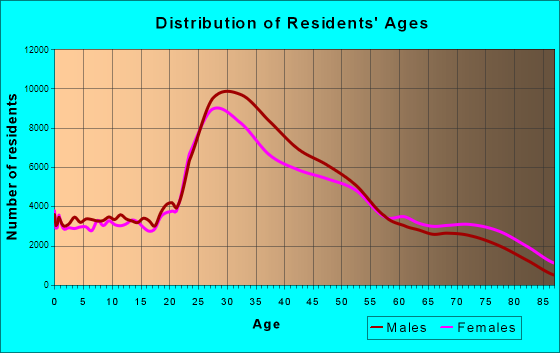
What we should copy from Vienna is mixed use development. A huge portion of American suburbs are zoned as single family only and you end up with a housing shortage, horrible traffic, and pollution. Mixed use development allows density to increase while reducing traffic and encouraging people to be more fit (by walking or biking more). It's such a no-brainer from a whole-system perspective.
The problem is that NIMBYs and existing regulations exist to preserve the status quo and protect the equity long-term homeowners have accumulated. In places like CA there are additional disincentives to reform like Proposition 13 that favor long term owners at the expense of new homebuyers. Obviously a tax-advantaged asset is going to have a higher price than an equivalent non-tax-advantaged asset. And significant property tax revenue that could otherwise fund public transit and additional construction isn't collected as a result.
Eventually enough boomers will die and the demographic forces will shift and create the opportunity for reform, but this will be too little too late for a whole generation. I'd love for a concerted national effort to tackle this problem and reduce barriers to building the kind of housing America needs, but it's hard to see that happening anytime soon.